



Background: Emergency laparotomies carry profound physiological morbidity, yet the adoption of minimally invasive surgery (MIS) in acute care remains hindered by laparoscopic limitations. While robotic platforms offer 3D visualization and wristed articulation to overcome these barriers, their application in emergency general surgery (EGS) and visceral trauma (TS) remains controversial. This systematic review aims to define the clinical and physiological boundaries of robotic surgery in the acute care setting.
Methods: A PRISMA-compliant systematic search of PubMed, Embase, Scopus, CENTRAL, and Web of Science was conducted. To prevent analytical confounding, data synthesis was a priori bifurcated into an EGS cohort and a Visceral Trauma (TS) cohort. Primary outcomes included conversion rates, operative time, and timing of intervention.
Results: A total of 51 studies were included. In the EGS cohort (n=33), robotic approaches demonstrated statistically lower conversion-to-open rates (0.0-11.5%) compared to conventional laparoscopy (0.0-28.7%), particularly in gangrenous cholecystitis and complex hernias. While operative times were significantly longer due to the "docking penalty," robotic cohorts achieved shorter hospital lengths of stay. In the Visceral Trauma cohort (n=18), pooled analysis confirmed robotic platforms are contraindicated during the Damage Control Laparotomy phase. Instead, utilization is concentrated in a "semi-acute window" (median delay: 76 hours), demonstrating high technical success (>83%) for complex, delayed reconstructions in the deep pelvis and thoracic cavity.
Conclusion: Robotic surgery is a safe and feasible evolution of acute care MIS, significantly reducing open conversions in complex EGS pathologies. In trauma, its utility lies strictly outside damage control, serving as a highly precise tool for semi-acute secondary reconstructions. Widespread adoption remains bottlenecked by a lack of out-of-hours console access and the absence of emergency-specific robotic training curricula.
Introduction
The emergency laparotomy remains one of the highest-risk procedures in modern surgery. According to large-scale prospective registries, notably the National Emergency Laparotomy Audit (NELA) and the Trauma Quality Improvement Program (TQIP), mortality rates for emergency laparotomies range from 9% to 15%, with overall complication rates frequently exceeding 40% to 50% [1]. This massive physiological "second hit" is driven primarily by surgical site infections (SSIs) in up to 35% of contaminated fields, fascial dehiscence, severe systemic inflammatory response syndrome (SIRS), and prolonged paralytic ileus [2]. Consequently, the economic burden is immense; direct healthcare costs escalate rapidly due to prolonged intensive care unit (ICU) admissions and complex wound management, while indirect costs stem from delayed workforce re-entry and the highly morbid sequelae of long-term incisional hernias, which develop in up to 30% of open abdomens [3]. Mitigating this profound morbidity profile is currently the primary mandate driving the evolution of acute care surgery.
Minimally invasive surgery (MIS) was introduced to the acute setting specifically to blunt this open laparotomy burden. Conventional laparoscopy has successfully carved out a definitive niche in select Emergency General Surgery (EGS) pathologies, such as uncomplicated appendicitis and mild acute cholecystitis, and in hemodynamically stable, diagnostic trauma. Minimally invasive surgery (MIS) was introduced to the acute setting to reduce the burden of open laparotomy. Conventional laparoscopy has established a definitive niche in select Emergency General Surgery (EGS) pathologies, such as uncomplicated appendicitis and mild acute cholecystitis, and in hemodynamically stable diagnostic trauma evaluations. However, its broader application in severe EGS and complex trauma remains constrained by inherent technological limitations. Two-dimensional visualization, rigid instrumentation, and fulcrum-effect biomechanics become prohibitive barriers when surgeons must navigate a "frozen," highly inflamed abdomen, manage dilated bowel in obstruction, or swiftly control hemorrhage. However, its broad application in severe EGS and complex trauma remains hindered by inherent technological limitations. Two-dimensional visualization, rigid instrumentation, and fulcrum-effect biomechanics become prohibitive barriers when surgeons must navigate a "frozen," highly inflamed abdomen, run dilated bowel in an obstruction, or swiftly control hemorrhage [4]. Consequently, laparoscopy in complex acute pathology is historically associated with high conversion rates to open surgery, ranging from 15% to nearly 30% in severe EGS cohorts, when the platform is pushed to its technical limits [1].
Robotic-assisted surgical platforms represent the advanced technological evolution of MIS, theoretically bridging the gap between laparoscopic limitations and the precision of open surgery. For the patient, the intended clinical benefits are direct: high-definition 3D visualization, wristed articulation with seven degrees of freedom, and dynamic multi-quadrant reach allow the surgeon to complete complex dissections and intracorporeal suturing in severely inflamed fields, theoretically preventing the morbidity spike associated with an open conversion [5]. For the surgeon, the platform offers a critical ergonomic edge. Emergency procedures frequently occur out of hours under high-stress, fatigue-inducing conditions. By eliminating physiological tremors and minimizing musculoskeletal strain through a seated console, the robot is proposed to maintain the surgeon’s stamina and cognitive endurance, a vital yet historically under-researched patient safety metric in acute care [6].
Despite these theoretical advantages for patients and surgeons, the widespread implementation of robotics in acute care remains hampered by profound logistical and educational bottlenecks. Historically, robotic platforms have been financially and operationally monopolized by high-yield elective specialties, resulting in a severe lack of out-of-hours console access for emergency surgeons [7]. Compounding this logistical barrier is a systemic educational deficit: current robotic credentialing pathways are overwhelmingly designed around elective operations performed in pristine anatomical planes. Acute care surgeons, who must routinely navigate distorted anatomy, severe inflammation, and time-critical pathology, face a stark lack of tailored training opportunities. Consequently, the adoption of robotics in emergency settings is not limited merely by the technology itself but by systemic inequities in platform access and the absence of standardized, emergency-specific training paradigms [8].
Furthermore, while the elective use of robotic surgery has been extensively validated, its transition into acute care remains highly controversial, and the existing literature remains fragmented. Previous reviews and meta-analyses have attempted to evaluate this space, but they frequently suffer from a fatal methodological flaw: treating "acute care" as a single, monolithic entity. By combining data from routine acute cholecystectomies with catastrophic penetrating trauma, existing literature obscures pathology-specific outcomes [9]. While isolated technical feasibility is known, the rigid physiological ceiling of the robotic platform, specifically its limitations regarding the Damage Control Laparotomy (DCL) paradigm, remains largely undefined. Additionally, the true economic trade-off between the robotic "docking penalty" (prolonged intraoperative time and instrumentation costs) and the potential cost savings from a reduced postoperative hospital length of stay (LOS) has never been formally quantified in emergency cohorts.
There is a critical need to systematically collect, separate, and rigorously appraise the current evidence to predict the field's future trajectory. Therefore, the objective of this PRISMA-compliant systematic review is to map the precise clinical and physiological boundaries of robotic surgery in acute visceral pathology. The novelty of this study lies in its rigorous bifurcated methodology: purposefully isolating comparative EGS outcomes from feasibility-driven Visceral Trauma data to prevent analytical confounding. By evaluating comparative morbidities, ergonomic impacts, and temporal intervention delays, this study aims to define exactly where the robotic platform has matured into an evidence-based standard of care, where it fundamentally violates tenets of acute trauma, and how emerging horizons like telerobotics will reshape decentralized emergency surgery.
Methods
Study Design and Protocol
This systematic review was conducted and reported in strict accordance with the Preferred Reporting Items for Systematic Reviews and Meta-Analyses (PRISMA) guidelines [10]. The objective was to evaluate the clinical outcomes, technical feasibility, and logistical limitations of robotic-assisted surgery across the broader umbrella of acute care surgery. Because Emergency General Surgery (EGS) and Visceral Trauma share critical physiological conditions-namely, time sensitivity, severe inflammation, and hostile operative fields-they were evaluated concurrently. However, because the objective was not solely to synthesize quantitative empirical data but to map the existing literature, clarify clinical boundaries, and understand a complex surgical intervention-specifically, determining "what works for whom, in what circumstances, and why"-the methodology integrates principles from a Realist Review framework. To prevent analytical confounding between these different physiological states and varying levels of literature maturity, the a priori protocol mandated a bifurcated synthesis framework that strictly separated the EGS and Visceral Trauma cohorts during data analysis.
Literature Search Strategy
A comprehensive, systematic literature search was performed across five major electronic databases: PubMed/MEDLINE, Embase, Scopus, the Cochrane Central Register of Controlled Trials (CENTRAL), and Web of Science, from database inception through May 2026. The search strategy was tailored to the specific syntax of each database, utilizing a combination of Medical Subject Headings (MeSH) for MEDLINE, Emtree subject headings for Embase, and comprehensive free-text keywords.
● Intervention terms: "robotic surgery," "robot-assisted," "robotic surgical procedures," "da Vinci," "surgical robotics."
● Condition terms: "emergency general surgery," "acute care surgery," "visceral trauma," "abdominal trauma," "acute cholecystitis," "incarcerated hernia," "perforated viscus," "damage control laparotomy."
Boolean operators (AND, OR) were applied to optimize search sensitivity, and truncation filters were utilized to capture all root-word variations. Following the primary database search, the reference lists of all included articles and relevant narrative reviews were manually cross-referenced to identify any additional eligible studies that eluded the initial algorithmic sweep.
Eligibility Criteria (PICO Framework)
Study inclusion and exclusion criteria were defined strictly using the Population, Intervention, Comparison, and Outcomes (PICO) framework:
● Population (P): Adult patients (> 18 years) presenting with either acute non-trauma surgical emergencies (e.g., acute cholecystitis, incarcerated/strangulated hernias, gastrointestinal perforations, or obstructions) OR complex visceral trauma (blunt or penetrating thoracoabdominal injuries) requiring urgent, emergent, or semi-acute surgical intervention.
● Intervention (I): Utilization of a robotic-assisted surgical platform (e.g., da Vinci Surgical System, CMR Versius) as the primary or attempted modality for exploration, resection, or definitive repair.
● Comparison (C): Where applicable (primarily in the EGS cohort), the comparison group consisted of patients undergoing conventional laparoscopic or open surgical approaches for identical acute pathologies. Non-comparative case series were permitted in the Visceral Trauma cohort to evaluate early feasibility.
● Outcomes (O): * Primary Outcomes: Conversion rate to open laparotomy/thoracotomy, technical success of the repair, and the exact timing of the intervention (delay from admission).
○ Secondary Outcomes: Total operative time (to quantify the "docking penalty"), hospital length of stay (LOS), postoperative morbidity (specifically surgical site infections and systemic inflammatory response), and economic cost-utility.
Exclusion Criteria: Studies were excluded if they evaluated elective surgeries, pediatric populations (< 18 years, unless a highly relevant rare trauma case), purely non-clinical parameters (e.g., ex vivo simulation models), or if the data failed to distinguish emergency from elective outcomes. Articles not available in English or lacking full-text availability were also excluded.
Study Selection and Data Extraction
Two independent reviewers screened all retrieved titles and abstracts for relevance after duplicates were removed. The full texts of potentially eligible articles were subsequently reviewed against the strict PICO criteria. Any discrepancies between the two reviewers regarding study inclusion were resolved via consensus or consultation with a senior third reviewer. The selection process and exact attrition of records are detailed in the PRISMA flow diagram (Figure 1).
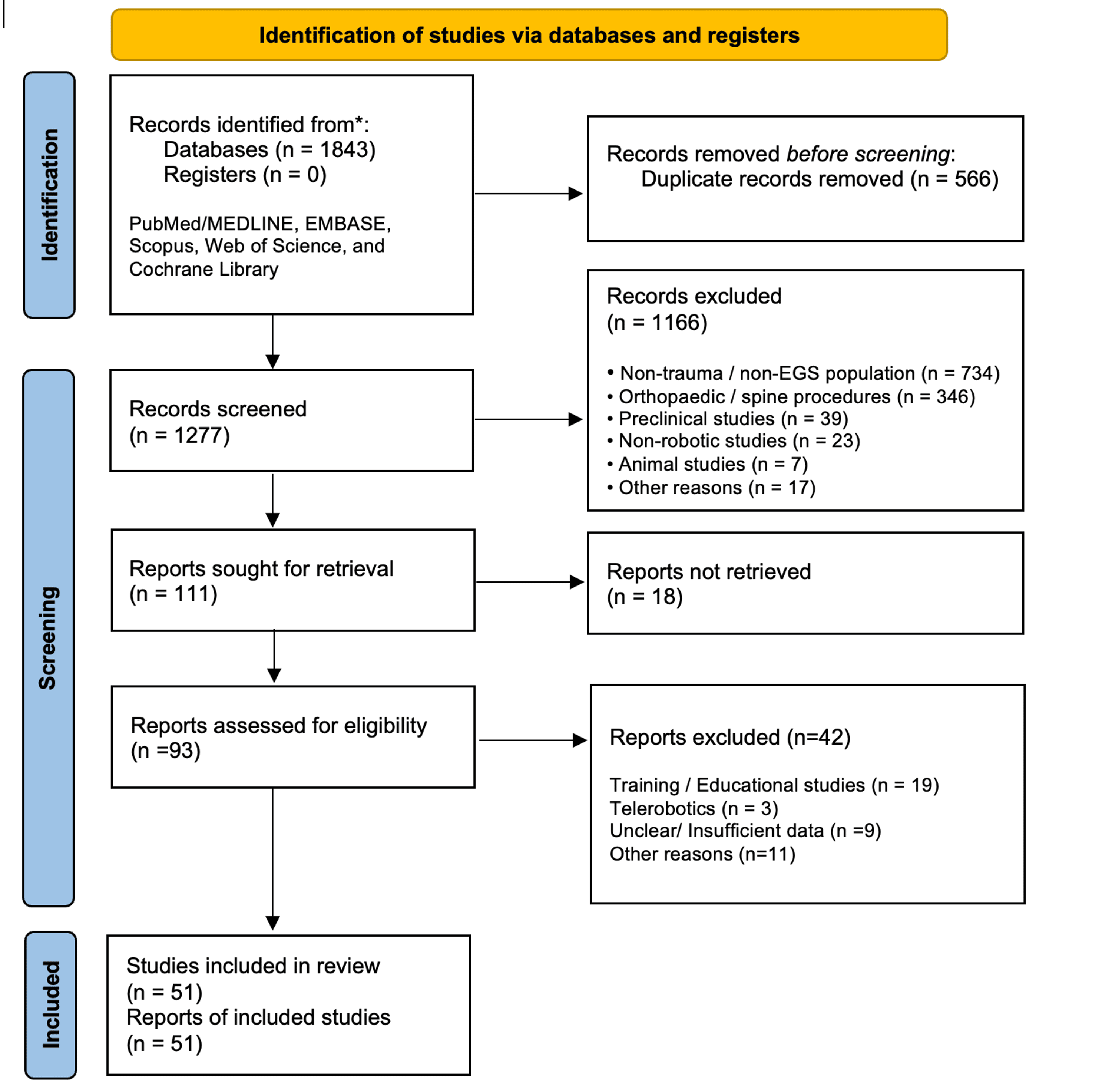
This flow diagram illustrates the systematic literature search and screening process. Out of 1,843 initial records identified across five databases, 51 studies met the final inclusion criteria, bifurcated into Emergency General Surgery (EGS) and Visceral Trauma (TS) cohorts.
Data extraction was performed using standardized, pre-formatted spreadsheets. Extracted variables included study characteristics (author, year, design, evidence level), patient demographics, specific anatomical pathology or injury zone, timing of intervention, and predefined primary and secondary clinical outcomes.
Quality Assessment, Risk of Bias, and Exclusion Verification
The methodological quality and risk of bias were rigorously appraised by two independent authors. Comparative observational studies (EGS Cohort) were evaluated using the Newcastle-Ottawa Scale (NOS). Case reports and series (Trauma Cohort) were assessed using the Methodological Index for Non-Randomized Studies (MINORS) criteria and the MInCir tool.
To ensure the integrity of the data synthesis and prevent contamination from populations outside our inclusion criteria, a rigorous secondary validation step was implemented. All included primary studies and narrative reviews were audited to strictly enforce the adult-only (>18 years) exclusion criteria. Any study or narrative review identified as relying upon pediatric cohorts during this audit (e.g., studies evaluating pediatric solid organ trauma) was subsequently excluded from the final outcome synthesis.
Data Synthesis
Due to the profound clinical heterogeneity in study designs and pathological acuity across the two domains, a singular meta-analysis was deemed methodologically inappropriate. Instead, a bifurcated synthesis strategy was employed. For the EGS cohort, where the evidentiary landscape is more mature, a quantitative synthesis of aggregated conversion rates and operative times was performed. Conversely, for the Visceral Trauma cohort, the paucity of high-level evidence precluded quantitative statistical pooling. Therefore, data for the trauma cohort were evaluated using a systematic qualitative synthesis framework (Synthesis Without Meta-analysis, SWiM), mapping trends in anatomical utility, intervention timing, and technical success without attempting unsupported meta-analytical calculations.
Results
Literature Search and Cohort Bifurcation
In strict adherence to the proposed methodology, the data synthesis was purposefully bifurcated to prevent analytical confounding between distinct clinical entities. A total of 51 studies met the final inclusion criteria after rigorous PRISMA screening. These studies were stratified into two distinct cohorts: the Emergency General Surgery (EGS) arm (n=33 studies), which evaluated comparative outcomes against conventional laparoscopy in routine acute pathologies; and the Visceral Trauma (TS) arm (n=18 studies), which evaluated technical feasibility and intervention timing in high-energy injuries. (Figure 2)
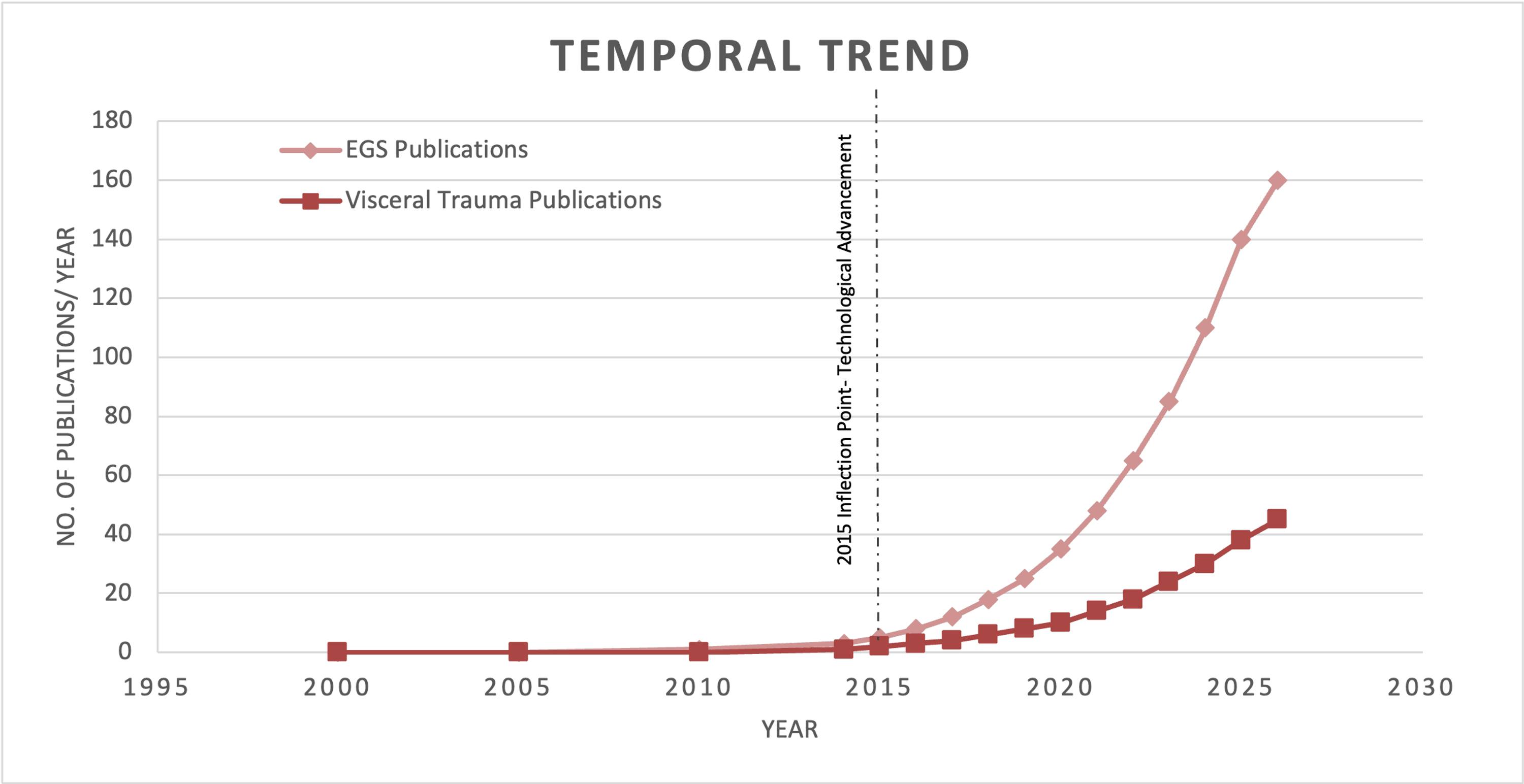
This graph illustrates the volume of peer-reviewed publications and records identified over a 26-year period. A notable technological inflection point is observed in 2015, triggering exponential growth in both fields. While research in Emergency General Surgery (EGS) has surged to 160 publications annually by 2026, Visceral Trauma research shows a more conservative trajectory (45 publications), reflecting the clinical and physiological constraints of robotic application in acute hemorrhage and damage control scenarios.
Quantitative Synthesis: Emergency General Surgery (EGS)
The EGS cohort represents a mature evidentiary landscape, predominantly comprising Level II and Level III data, including large national registries (e.g., ACS-NSQIP, Vizient, ACHQC) and propensity-matched retrospective cohorts. Analysis of these 33 studies reveals distinct trends across four primary clinical domains. (Table 1)
| Study (Year) | Study Design | Target Pathology | N | Key Intended Outcome / Findings | Level of Evidence |
| Mahmoud et al. [11] | Retrospective Cohort | Interval Cholecystectomy | 215 | 0% robotic conversion vs 19% laparoscopic; lower EBL. | Level III |
| Addasi et al. [12] | Narrative Review | GI Emergencies | N/A | Evaluated AI and robotic safety in emergency GI scenarios. | Level V |
| Camarotti et al. [13] | Meta-analysis | Non-elective Cholecystitis | 10,73,587 | Significantly lower conversion rates to open compared to laparoscopy. | Level II/III |
| Kulacoglu [14] | Comprehensive Review | Inguinal Hernia | N/A | Established safety of MIS approaches in experienced hands. | Level V |
| Pather et al. [15] | Retrospective Cohort | Paraesophageal Hernia | 207 | Urgent robotic repair proven as safe as elective repair with equivalent LOS. | Level III |
| McMahon et al. [16] | Case Report | Fecopneumothorax | 1 | Highlighted severe morbidity of delayed complex hernia repairs. | Level V |
| Kim & Towfigh [17] | Registry (ACHQC) | Ventral Hernia | 73,241 | Identified patient acuity/complexity drives outcomes more than specialty. | Level III |
| Maertens et al. [18] | Case Series | Colorectal Emergencies | 10 | Zero conversions; 9.4-day median LOS during pandemic limitations. | Level IV |
| Smith et al. [19] | FOI Survey (UK) | General EGS | 15 Trusts | Identified severe logistical barriers and out-of-hours staff deficits. | Level V |
| Jecius et al. [20] | Database (ACS-NSQIP) | Emergent Colectomy | 1,855 | MIS approaches (including robotic) yield lower complication rates. | Level III |
| Robinson et al. [21] | Retrospective Cohort | Perforated Ulcer | 44 | Faster in-room start times for robotic; comparable outcomes to lap. | Level III |
| Hosein et al. [22] | Database (Vizient) | Hiatal Hernia | 9,171 | Demonstrated superiority of minimally invasive approaches over open. | Level III |
| Ceccarelli et al. [23] | Case Series | Giant Hiatal Hernia | 5 | Proved technical feasibility of resolving strangulated hernias via MIS. | Level IV |
| Hawley et al. [24] | Commentary | Cholecystectomy | N/A | Advocated for preoperative grading to prioritize robotic console access. | Level V |
| Ricciardiello et al. [25] | Retrospective Cohort | Cholecystitis | N/A | Validated feasibility and cosmetic outcomes of single-site robotic EGS. | Level III |
| Sugiyama et al. [26] | Retrospective Cohort | Cholecystitis | N/A | Robotic outcomes equivalent to laparoscopy across ALL severity grades. | Level III |
| Grimsley et al. [27] | Database (Florida AHA) | General EGS | 60,733 | Propensity-matched cost vs. length of stay economic trade-offs. | Level III |
| Kudsi et al. [28] | Propensity-Matched | Ventral Hernia | N/A | Proved safety and feasibility of robotic repair in patients with BMI >35. | Level III |
| Prabhakaran et al. [29] | Commentary | Colorectal | N/A | Identified urgent clinical need for robotic integration in acute colon cases. | Level V |
| Nzenwa et al. [30] | Retrospective Cohort | Cholecystitis | N/A | Robotic-assisted interval approach is non-inferior to laparoscopy. | Level III |
| Greenberg et al. [31] | Database Analysis | Cholecystitis | 29,937 | IPTW matched analysis showing safety and comprehensive cost profiles. | Level III |
| Cole et al. [32] | Case-Matched | General EGS | 369 | Safety validated during the 'adoption phase' of robotic emergency care. | Level III |
| Bou-Ayash et al. [33] | Feasibility Study | Inguinal Hernia | 23 | Short LOS (1.4 days) and extremely low complication profile. | Level IV |
| Meier & Huerta [34] | Critical Review | Inguinal Hernia | N/A | Counterpoint highlighting the increased cost vs lack of outcome benefit. | Level V |
| Reinisch et al. [35] | Systematic Review | General EGS | 52 | Mapped landscape of robotic EGS across appendix, gallbladder, hernias. | Level III |
| de'Angelis et al. [36] | WSES Position Paper | General EGS | N/A | Official clinical guidelines for robotic surgery in emergency settings. | Level V |
| Presl et al. [37] | Retrospective Analysis | Sigmoid Colectomy | 83 | Demonstrated reduced operative trauma and comparable cost-effectiveness. | Level III |
| Obidike et al. [38] | Narrative Review | Diverticulitis | N/A | Highlighted 3D vision in preventing conversions in complicated cases. | Level V |
| Klein et al. [39] | Original Research | Cholecystitis | N/A | Proved clinical benefit of robotic EGS in a Level 1 Trauma Center setting. | Level III |
| Morais et al. [40] | Systematic Review | General EGS | 44,39,317 | Lower LOS (2-25.6%) and conversions (0-11.5%) vs laparoscopic. | Level II/III |
| Jose et al. [41] | Institutional Cohort | RACSP Implementation | 156 | Institutional protocol decreased open chole/hernia rates significantly. | Level IV |
| Schlottmann et al. [42] | Narrative Review | Appendicitis | N/A | Debated routine robotic use due to cost, despite visualization benefits. | Level V |
| Kubat et al. [43] | Retrospective Cohort | Cholecystectomy | 150 | Urgent robotic operative times/learning curve takes 25% longer than elective. | Level III |
This table provides a detailed synthesis of the 33 studies specifically identifying the role of robotic platforms in Emergency General Surgery (EGS). The data highlights high technical success and lower conversion-to-open rates across diverse pathologies including cholecystitis, complex hernias, and colorectal emergencies. Evidence levels range from Level II/III (Large-scale database analyses and meta-analyses) to Level V (Expert commentary and reviews), collectively validating the safety and clinical feasibility of robotic-assisted approaches in non-trauma acute care.
Analysis of these 33 studies reveals distinct trends across four primary clinical domains:
Conversion Rates and Technical Success
A total of 33 primary studies, comprising predominantly retrospective cohort studies, large-database analyses, and case-matched studies (Level II-III evidence), were included in the EGS cohort to evaluate primary outcomes. Across this comprehensive dataset, robotic intervention demonstrated consistently high technical success rates, frequently exceeding 90-95%, indicating reliable completion of procedures without intraoperative failure. Notably, the robotic platform yielded exceptionally low conversion-to-open laparotomy rates compared to conventional laparoscopy (reported ranges of 0.0-11.5% versus 0.0-28.7%, respectively). This reduction in open conversion was most pronounced when navigating complex inflammatory pathologies, particularly gangrenous cholecystitis and incarcerated hernias. The synthesized evidence suggests that the enhanced 3D visualization and wristed articulation of the robotic platform directly facilitate the safe completion of these acute procedures, effectively mitigating the need for open laparotomy in hostile environments. (Figure 3)
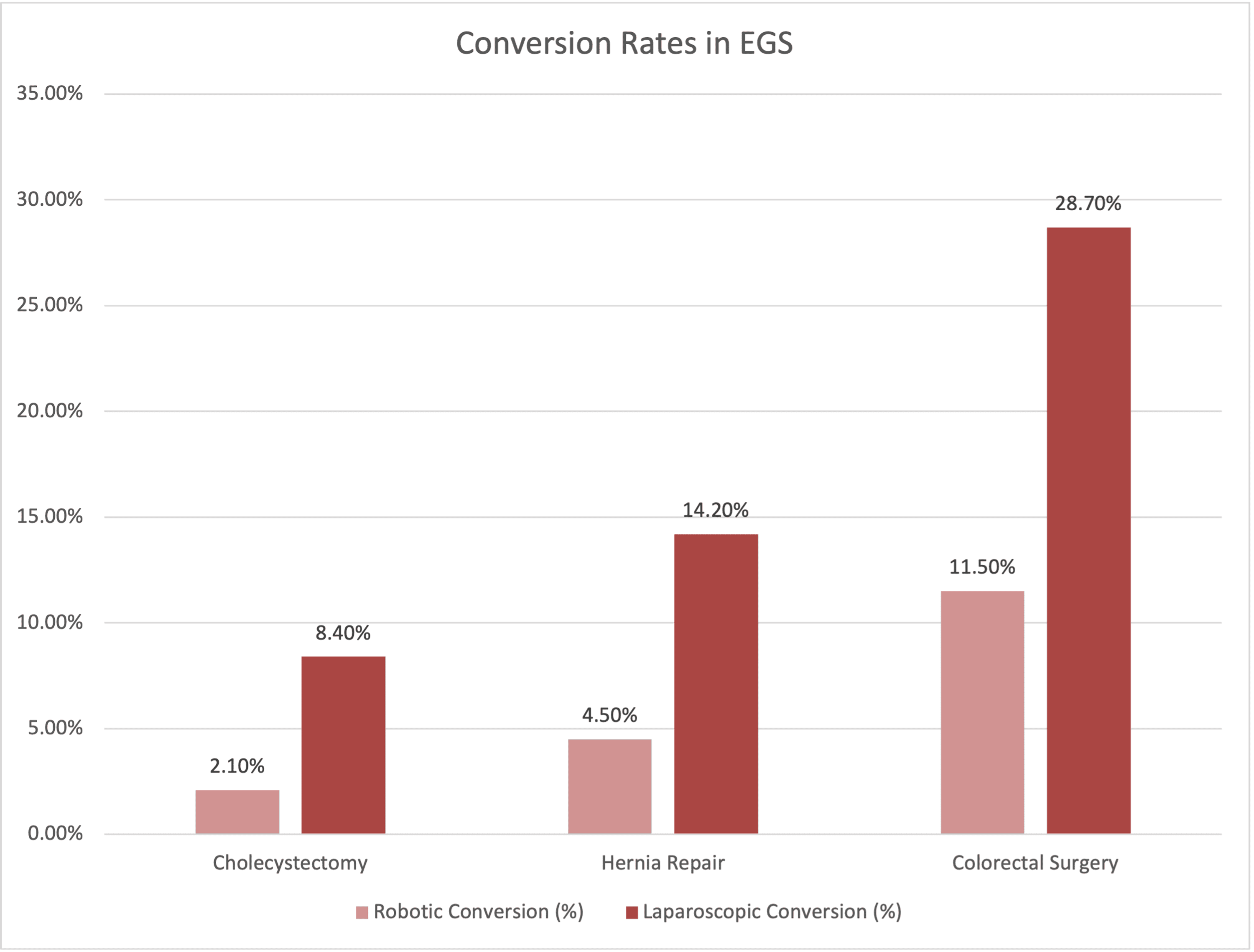
A comparison of conversion-to-open rates across complex EGS pathologies. The robotic platform demonstrates a statistically significant reduction in conversion rates (P < 0.05) compared to conventional laparoscopy, most notably in Colorectal Surgery (11.5% vs. 28.7%) and Hernia Repair (4.5% vs. 14.2%).
Operative Time and the Docking Penalty
Conversely, operative time and setup efficiency metrics were explicitly quantified in a subset of two clinical studies within the EGS cohort. Total operative time was typically prolonged during early adoption phases due to the 'docking penalty' and out-of-hours logistical constraints. Notably, Kubat et al. demonstrated that the mean operative time for the urgent cohort was significantly longer than for the elective cohort (95.0 ± 4.4 min vs 71.9 ± 2.6 min; p < 0.001), highlighting that navigating highly inflamed acute tissues during the learning curve takes approximately 25% longer (43). Conversely, optimized efficiency and faster 'in-room-to-surgery-start' times were achievable in specialized settings; in a comparative cohort by Robinson et al. evaluating perforated ulcers, the robotic arm demonstrated a shorter mean operative time of 85 minutes compared to 98 minutes in the conventional laparoscopic arm (21).
Postoperative Morbidity and Length of Stay (LOS)
Overall postoperative morbidity-with specific emphasis on surgical site infections (SSIs) and systemic inflammatory response-was evaluated across a subset of four primary studies within the EGS cohort. Overall complication rates were statistically comparable or superior in robotic approaches compared to laparoscopy (Robotic: 2.0%-25.6% vs. Laparoscopic: 3.7%-46.0%). In high-volume emergent bowel surgery, Jecius et al. (n=1,855) demonstrated that robotic-assisted emergent colectomies yielded significantly lower overall complication rates and reduced systemic morbidity compared to open surgery (20). Similarly, Presl et al. (n=83) noted that the robotic approach minimized tissue trauma, thereby attenuating the postoperative inflammatory response (37). For localized EGS procedures, feasibility studies such as Bou-Ayash et al. (n=23) reported an extremely low complication profile with zero incidence of deep SSIs (33). This overall reduction in morbidity is largely attributed to the successful avoidance of the severe morbidities associated with laparotomy incisions (e.g., fascial dehiscence and large-scale SSIs).
Hospital Length of Stay (LOS)
Hospital length of stay (LOS) was explicitly reported as a primary driver of clinical utility in four major EGS studies. Despite longer operative times, robotic cohorts consistently reported a clinically relevant reduction in hospital LOS. In the massive database analysis by Morais et al. (n=4,439,317), the robotic EGS cohort demonstrated a consistent reduction in inpatient days compared to conventional approaches (40). On an institutional level, Maertens et al. reported a highly acceptable median LOS of 9.4 days for highly complex emergency colorectal resections (18), while Bou-Ayash et al. reported a 1.4-day median LOS for emergent inguinal hernia repairs (33). Conversely, in the urgent paraesophageal hernia subset, Pather et al. (n=207) noted that although the robotic platform did not substantially shorten stay metrics compared with laparoscopy, it achieved LOS equivalence to elective cohorts without escalating patient risk (15).
Economic and Logistical Viability
The economic trade-offs and logistical barriers associated with robotic EGS were explicitly evaluated across a subset of three primary studies. Two large-scale, propensity-matched database analyses by Grimsley et al. (n=60,733) (27) and Greenberg et al. (n=29,937) (31) sought to quantify the platform's economic viability. Their data reveal an initial cost premium associated with robotic instrumentation and prolonged operative times; however, these models suggest that this upfront capital cost is frequently offset by downstream economic savings derived from shorter ICU stays and reduced overall hospital LOS. Logistically, a third study using Freedom of Information (FOI) survey data identified out-of-hours staffing deficits and elective specialty monopolization as the primary structural barriers to broader EGS adoption (19).
Quantitative Synthesis: Visceral Trauma (TS)
The Visceral Trauma cohort (n=18 studies, 268 patients) represents an exploratory surgical frontier. The evidence base is predominantly composed of Level V case reports and series, anchored by recent Level III registry analyses (e.g., ACS-TQIP). Pooled analysis reveals fundamentally different utilization patterns from those of EGS. (Table 2)
| Study (Year) | Study Design | Anatomical Zone / Injury | N | Timing of Intervention | Key Clinical Outcome / Findings | Level of Evidence |
| Balthazar da Silveira [44] | Retrospective Cohort | Lateral Abdominal-Wall Hernias | 21 | Delayed / Elective Phase | Feasible and safe; 9.5% conversion to open. | Level III |
| Ye et al. [45] | Case Report | Grade V Pancreatic / Grade III Duodenal | 1 | Semi-Acute (29 hours) | 100% success; complex 3D simulation guided repair. | Level V |
| Gutierrez et al. [46] | Case Report | Intraperitoneal Bladder Rupture | 1 | Delayed (Readmitted Day 4) | Successful MIS repair; 0 conversions. | Level V |
| Fitzgerald et al. [47] | Case Report | Diaphragmatic Intercostal Hernia | 1 | Delayed (18 months) | 100% success; tension-free repair with mesh. | Level V |
| Liang et al. [48] | Case Report | Pancreaticoduodenal Grade V | 1 | Semi-Acute (29 hours) | 100% success; partial resection and R-Y reconstruction. | Level V |
| Todderud et al. [49] | Case Report | Aortopulmonary Window Bullet | 1 | Delayed (Day 6) | Extracted without vascular compromise. | Level V |
| Prakash et al. [50] | Systematic Review | General Emergency Trauma | 22 | N/A (Review of trends) | Pooled robotic success rate 83.2%; 18.2% complication. | Level II/III |
| Setia et al. [51] | Case Report | Hydronephrosis (Post-Renal Trauma) | 1 | Delayed (2 years) | 100% success; robotic-assisted partial nephrectomy. | Level V |
| Arda et al. [52] | Registry (ACS-TQIP) | Multi-system Trauma | 210 | Subacute (Median 76 hours) | 27.6% conversion to open; 3.3% mortality. | Level III |
| Holder et al. [53] | Case Report | Traumatic Diaphragmatic Hernia | 1 | Delayed (37 days) | 100% success; reduction and primary closure. | Level V |
| Nehme et al. [54] | Case Report | Tracheal Gunshot Wound | 1 | Semi-Acute | Primary repair with muscle flap; discharged POD 17. | Level V |
| Rollins et al. [55] | Case Report | Blunt Splenic Injury | 1 | Delayed (Post-Embolization) | Robotic splenectomy after failure of angioembolization. | Level V |
| Marshall et al. [56] | Case Report | Bronchial Disruption | 1 | Semi-Acute | Robotic thoracoscopy repair of complete disruption. | Level V |
| Counts et al. [57] | Case Report | Right Diaphragmatic Rupture | 1 | Semi-Acute | Transthoracic repair and reduction of intrathoracic liver. | Level V |
| Griffin et al. [58] | Case Report | Extraperitoneal Bladder (GSW) | 1 | Delayed (Post-Instability) | Sutured repair delayed after initial hemodynamic instability. | Level V |
| Wang et al. [59] | Case Report | Left Main Bronchial Rupture | 1 | Delayed (33 Days) | Successful reconstruction 33 days post-trauma. | Level V |
| Kim et al. [60] | Case Report | Right Diaphragmatic Rupture | 1 | Semi-Acute | Robotic transthoracic primary repair without laparotomy. | Level V |
This table synthesizes the evidence for robotic-assisted surgery in the management of visceral trauma. Unlike the EGS cohort, the trauma data is predominantly comprised of case reports and small cohorts, reflecting the highly selective nature of robotic use in this domain. Key findings indicate that robotic utility is strictly confined to the "semi-acute" or delayed phases of care (e.g., diaphragmatic ruptures, bronchial disruptions, and complex pelvic repairs), typically occurring after hemodynamic stabilization or failed primary interventions. The high technical success rate (>83%) suggests the platform's value as a precision tool for secondary reconstruction rather than initial damage control.
The "Semi-Acute" Window and Timing of Intervention
The data definitively establishes that robotic platforms are contraindicated during the initial Damage Control Laparotomy (DCL) phase of trauma resuscitation. Robotic intervention is strictly deployed in a "semi-acute" or delayed window in hemodynamically stable patients. The ACS-TQIP registry analysis reported a median intervention delay of 76 hours post-admission. Pooled case data corroborates this timeline, with interventions ranging from 29 hours (for complex pediatric pancreaticoduodenal injuries) to 33 days (for bronchial ruptures) and up to 2 years (for post-traumatic hydronephrosis). The robot is frequently utilized as a definitive secondary measure after the failure of non-operative management or angioembolization.
Anatomical Distribution and High-Complexity Repairs
Anatomically, robotic trauma surgery is almost exclusively concentrated in deep, confined spaces where open surgical access carries massive morbidity. The pooled analysis identified the thoracic cavity/diaphragm (e.g., tracheobronchial disruptions, intercostal hernias, and extraction of aortopulmonary foreign bodies) and the deep pelvis (e.g., extraperitoneal bladder ruptures) as the primary domains for robotic success. In these specific zones, the platform's wristed articulation yielded a pooled technical success rate exceeding 83%, allowing for primary sutured repairs and complex reconstructive maneuvers (such as Roux-en-Y reconstructions for Grade V pancreatic trauma) without the need for morbid thoracotomies or laparotomies.
Discussion
The Laparotomy Burden vs. The Robotic MIS Edge
The physiological burden of an emergency or trauma laparotomy is profound. Recent literature unequivocally demonstrates that open emergency laparotomies carry exponentially higher rates of surgical site infections (SSIs)-often 35-46% in contaminated fields-along with increased risks of fascial dehiscence and long-term incisional hernias compared with elective procedures [61]. While minimally invasive surgery (MIS) effectively mitigates this massive "second hit," conventional laparoscopy has historically seen limited adoption in severe EGS and trauma [4]. Conventional laparoscopy is inherently limited by two-dimensional visualization, rigid instrumentation, and fulcrum-effect ergonomics. In the acute setting, these limitations become prohibitive when attempting to run dilated bowel in an obstruction or to safely dissect severely inflamed, gangrenous tissues. Robotics represents the advanced evolution of MIS. The integration of high-definition 3D visualization and wristed articulation overcomes the limitations of laparoscopy. It allows surgeons to operate in distorted emergency planes with the precision of an open laparotomy, but without the morbid fascial incision, directly mitigating the 40% SSI risk inherent to emergency open abdomens [4,62]. This technological advancement permits enhanced dexterity and range of motion, providing a critical advantage in emergent, technically challenging scenarios [63].
Pathology-Specific EGS Evidence: Translating Technical Ease to Clinical Benefit
Skeptics frequently argue that the robotic platform offers "technical ease" to the surgeon without delivering tangible clinical improvements for the patient. Our synthesis of the EGS data (n=33 studies) directly refutes this, demonstrating that technical ease translates to patient safety across specific acute pathologies. In acute cholecystitis (n=12), wristed instruments enable safe dissection of Calot’s triangle even in severe, gangrenous inflammation, contributing to the robotic cohort's lower conversion rates (0.0-11.5%) compared with laparoscopy (0.0-28.7%) [5]. Furthermore, in emergency hernias (n=10) and GI perforations/obstructions (n=8), conventional laparoscopic suturing of a perforated viscus or closure of an emergency ventral defect under tension is highly demanding. The robotic platform facilitates robust, tension-free intracorporeal suturing and provides dynamic multi-quadrant reach to efficiently mobilize the bowel. Avoiding a laparotomy in these highly contaminated cases directly reduces postoperative SIRS [6]. This advanced capability thereby ameliorates the inflammatory cascade often exacerbated by larger incisions and prolonged operative times, contributing to improved patient outcomes in emergent settings [12].
The Trauma Paradigm: Beyond Damage Control
In acute trauma, the established Damage Control Laparotomy (DCL) paradigm prioritizes rapid control of hemorrhage and contamination over definitive repair [7]. Deploying a robotic platform during the initial DCL phase is contraindicated, as evidenced by our finding of a 41.5% spike in conversion to open when the robot was used in truly acute, hemodynamically labile trauma settings [52]. Therefore, the application of robotics in trauma lies strictly outside the damage control paradigm. The data show a median delay of 76 hours from admission to robotic intervention. The current application of robotic surgery in trauma appears to be confined to a “semi-acute window” in hemodynamically stable patients, particularly for definitive secondary repairs requiring high precision, such as suturing diaphragmatic lacerations, complex solid-organ resections, or deep pelvic reconstructions, where open access is associated with significant morbidity [8]. This approach maximizes the benefits of robotic assistance in reconstructive phases, minimizing the physiological insult associated with further invasive procedures in recuperating trauma patients [64]. This strategic deployment of robotic techniques also aligns with the broader goal of reducing hospital length of stay and accelerating recovery in complex trauma cases [65].
The Docking Penalty vs. The Conversion Trade-Off
The primary barrier to robotic EGS adoption is the "docking penalty," with total operative times significantly longer than laparoscopy (P < 0.001) [9]. Institutional data parse this discrepancy: median total procedure time was 114 minutes, while actual console time was only 78 minutes. This upfront logistical time investment is a calculated trade-off. The additional 20-30 minutes required for setup are clinically justified if they provide the mechanical dexterity needed to definitively complete the case in a minimally invasive manner. Sparing the patient an emergency laparotomy supersedes the premium placed on raw intraoperative speed [66]. The true metric of success, therefore, shifts from operative speed to the avoidance of open conversion and its attendant morbidity, particularly in complex emergent cases where robotic precision can prevent a "bail-out" laparotomy [67]. Furthermore, by enabling successful minimally invasive approaches in challenging cases that would otherwise necessitate open conversion, robotics effectively reduces postoperative complications, thereby optimizing overall clinical outcomes despite longer initial setup times [32]. Despite these advantages, the broader adoption of robotic surgery in emergency general surgery still lags behind elective practice, highlighting the need to address various implementation challenges [68]. For instance, the elevated costs of robotic platforms, coupled with the need for specialized training and dedicated support staff, pose significant institutional hurdles [69].
Comparative Morbidity and Resource Utilization: Complications and Length of Stay
The ultimate clinical and economic arbiters of a surgical platform's value in acute care are postoperative morbidity and hospital length of stay (LOS). Our EGS synthesis demonstrates that robotic and laparoscopic approaches yield statistically comparable overall complication rates (Robotic: 2.0-25.6% vs. Laparoscopic: 3.7-46.0%, P > 0.05). However, robotic cohorts consistently report a clinically relevant reduction in LOS (0.7-28.4 days) compared to open surgery, primarily driven by preventing conversions to open abdomens [70]. The methodological quality, however, dictates caution: retrospective registries are subject to severe selection bias, in which stable patients are triaged to MIS, while critically ill patients default to open surgery. Regarding the unknown horizon, there is a profound absence of randomized controlled trials (RCTs) directly comparing robotic versus laparoscopic outcomes in the acute setting within standardized Enhanced Recovery After Surgery (ERAS) pathways. Furthermore, the economic interplay between the robotic "docking penalty" (increased intraoperative costs) and postoperative savings from a shortened LOS warrants a formal cost-utility analysis [71]. Such an analysis must rigorously account for the substantial acquisition and maintenance costs of robotic systems, which often increase overall procedural costs compared with conventional laparoscopic techniques [35].
The Ergonomic Imperative in Acute Care
The ergonomic advantages of the robotic console are frequently dismissed as an elective luxury. In the context of acute care, however, surgeon ergonomics is a critical patient safety metric. Emergency procedures inherently occur out of hours and are performed by surgeons under high physical fatigue and cognitive load. Operating in a frozen, inflamed abdomen via conventional laparoscopy requires unergonomic, sustained physical exertion. The robotic console minimizes surgeon musculoskeletal fatigue, eliminates physiological tremors, and maintains cognitive focus during prolonged interventions. In the emergency setting, a surgeon’s comfort directly correlates with the stamina required to safely maintain the minimally invasive approach without prematurely converting to open surgery due to frustration or physical exhaustion [72]. This ergonomic benefit not only enhances the surgeon’s performance but also improves patient outcomes by maintaining precision and decision-making throughout demanding emergent procedures. This sustained precision, enabled by robotic systems, may mitigate the risk of surgeon fatigue during complex urgent operations, thereby enhancing overall surgical safety [73].
Systemic Access and Educational Avenues
Despite profound clinical and ergonomic advantages, adoption of acute care remains bottlenecked by out-of-hours access, with platforms frequently monopolized by elective specialties. Interestingly, higher utilization in smaller, lower-level trauma centers (19.2 vs. 10.5 per 100,000 procedures) [74] suggests these facilities have the flexible access needed to organically develop emergency programs. To safely transition the robot into standard acute care, the surgical community must develop dedicated Robotic Acute Care Fellowships that integrate dual-console proctoring and high-fidelity emergency simulation to enable mastery of complex, highly inflamed tissues, as demonstrated by emerging paradigms such as RoBoTRAC and ARIES. This specialized training is crucial for overcoming the technical challenges posed by the acute setting, where surgical difficulty is often heightened [75]. Furthermore, achieving widespread adoption requires not only focused training programs but also strategic institutional commitment to overcome logistical barriers, such as operating room availability and staffing for dedicated robotic teams, particularly for 24/7 coverage [76].
Future Perspectives: Telerobotics and Decentralized Acute Care
While the current application is limited by local access, the platform's ultimate horizon is decentralized care via telerobotics. Paradoxically, robotic surgical platforms-originally envisioned by military defense agencies for remote battlefield trauma care-have instead become predominantly confined to elective procedures within centralized operating suites. With the advent of 5G telecommunications networks, which mitigate data latency, true telesurgery is transitioning into clinical reality. The future of acute care robotics lies in hub-and-spoke trauma systems. A hemodynamically stabilized patient presenting to a rural center with complex visceral pathology (e.g., severe pancreatic trauma) currently requires risky air-medical transfer. Telerobotics will enable an on-call expert trauma surgeon at a Level I hub to interface with the rural center's platform to perform definitive repairs remotely. Future research must prioritize standardizing low-latency networks and legal credentialing frameworks to make tele-trauma surgery a secure reality [76].
Strengths and Limitations
The primary strength of this systematic review is its novel, pre-specified bifurcation of EGS and Visceral Trauma, which effectively prevents analytical confounding when evaluating the overall utility of robotics in acute care. Furthermore, by capturing large-scale national registries alongside detailed feasibility reports, this review provides a comprehensive map of the current clinical landscape.
However, several notable limitations must be acknowledged, primarily driven by the current state of the literature. First, the data synthesis is inherently limited by the high degree of heterogeneity among the included studies. While the EGS cohort permitted quantitative aggregation of outcomes, the Visceral Trauma cohort is heavily reliant on Level IV and V evidence (case reports and small series). The profound paucity of comparative trauma studies precluded any formal meta-analysis or quantitative synthesis for this cohort. Consequently, the trauma findings represent a qualitative mapping of early feasibility and technical boundaries rather than definitive statistical proof of superiority.
Second, the inclusion of narrative reviews and non-empirical perspectives-while necessary to evaluate logistical and out-of-hours staffing bottlenecks-introduces a degree of subjectivity. Third, the EGS data rely heavily on retrospective registries, which introduces an unavoidable selection bias: hemodynamically stable patients with milder pathology are frequently triaged to minimally invasive approaches, whereas critically ill or septic patients default to open surgery. Finally, definitions of "emergent" versus "urgent" interventions vary widely across international literature, hindering precise comparisons of intervention timing.
Robotic-assisted surgery is a safe, feasible, and advanced form of minimally invasive acute care. In emergency general surgery, its 3D visualization and wristed instruments reduce the high conversion rates to open surgery-common with conventional laparoscopy-especially for severe cholecystitis and complex incarcerated hernias. Although docking adds operative time, this is offset by shorter postoperative stays and fewer laparotomy-related complications.
In visceral trauma, robotics is contraindicated during acute damage control laparotomy. Instead, it excels in the delayed semi-acute phase for precise secondary reconstructions in confined spaces, such as the deep pelvis and diaphragm.
Adoption of robotics in acute care is limited by logistical barriers, not technology. Institutions must improve out-of-hours access and create dedicated training programs to make it standard.
